
// STATUS: BROADCASTING FROM MISSION CONTROL
// PROTOCOL: DATA TRANSMISSION 2026.04
// SUBJECT: CORE PERFORMANCE OPTIMIZATION
The digital landscape of 2026 has officially shifted. As of the March 2026 core update, Google has transitioned technical performance from a "ranking advantage" to a "mission-critical floor." If your platform isn't operating at aerospace-grade precision, your signal is being filtered out of the global search grid.
At Artivelab, we monitor these shifts with surgical accuracy. For businesses relying on a web development agency to maintain their competitive edge, the stakes have never been higher. Sites with a Largest Contentful Paint (LCP) exceeding 2.5 seconds are currently experiencing a 23% drop in visibility compared to their high-velocity counterparts.
Here are the 7 critical performance failures your development team must neutralize to survive the 2026 update.
01 // NEGLIGENT INTERACTION TO NEXT PAINT (INP)
In 2026, user patience is non-existent. Google’s latest algorithms prioritize Interaction to Next Paint (INP) over almost every other interactivity metric. If a user clicks a button and the system terminal doesn't respond within 200 milliseconds, the interaction is flagged as a failure.
Many agencies focus on "visual load" but ignore the heavy JavaScript execution happening in the background. A high-performance web development agency ensures that the main thread is never blocked. By offloading complex logic to Web Workers and optimizing event handlers, we ensure your interface feels like an extension of the user’s own intent.
THE FIX: Audit your JavaScript execution loops. If your INP is >200ms, your custom software development requires a code-splitting overhaul to prioritize immediate visual feedback.
02 // SUB-OPTIMAL CLOUD INFRASTRUCTURE & LATENCY
Your frontend is only as fast as the backbone supporting it. One of the most common mistakes is relying on outdated hosting solutions that lack global distribution. In the 2026 environment, cloud infrastructure services must be decentralized.
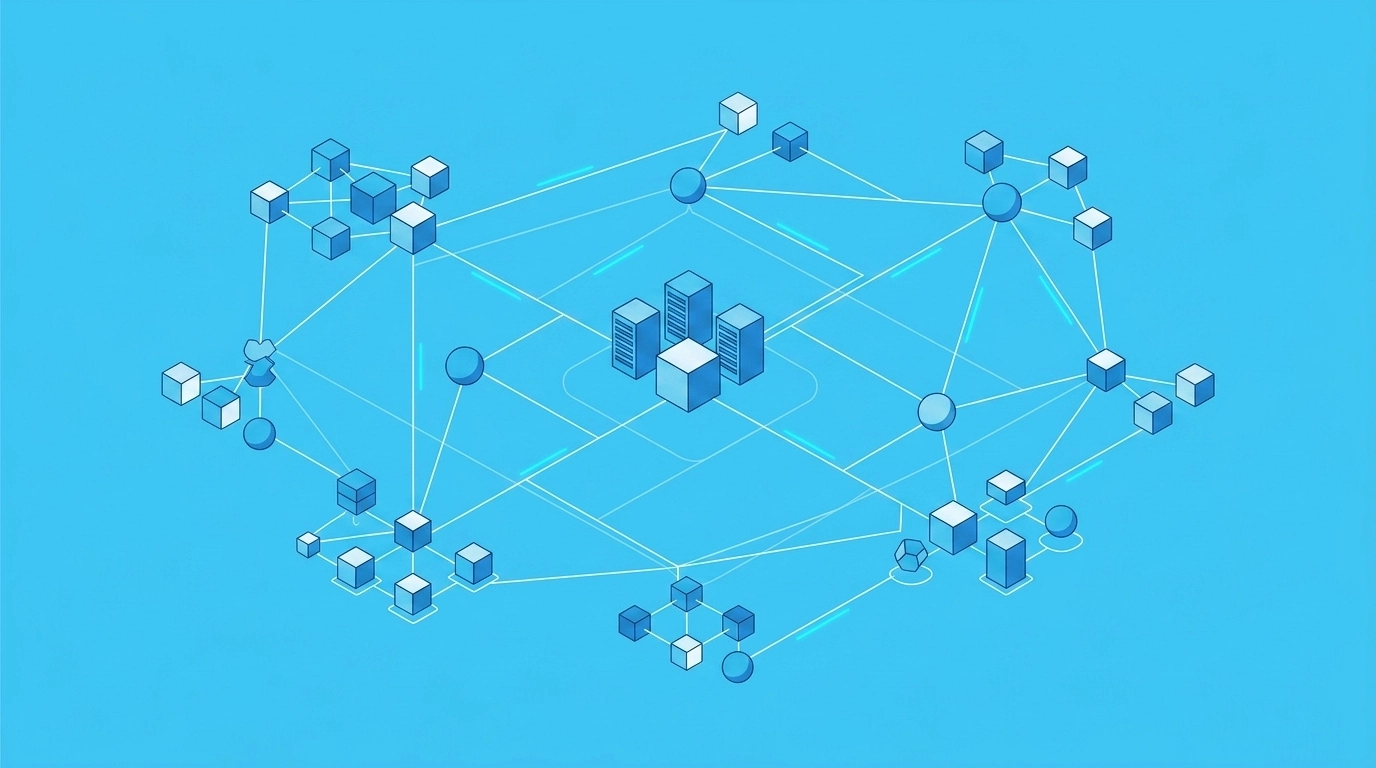
If your data is traveling across continents to reach a user, your Time to First Byte (TTFB) will trigger a performance alert. At Artivelab, we utilize AWS and Docker to architect scalable, edge-computed environments. This ensures that whether your user is in Athens or New York, the data transmission remains near-instantaneous.
THE FIX: Transition to serverless architectures or edge computing nodes. If your web development agency isn't discussing AWS Lambda or global CDN edge caching, your infrastructure is obsolete.
03 // THE "INFORMATION GAIN" DEFICIT
Performance isn't just about speed; it's about the efficiency of information delivery. Google’s 2026 update introduced a heavier weight on "Information Gain." This means that if your site loads quickly but only serves recycled, AI-generated fluff, the algorithm will deprioritize your signal.
Your technical performance must support high-density, original data. This requires a UI/UX design that presents complex information clearly and rapidly. If your site's structure forces Google's crawlers to work harder to find original insights, your "crawl budget" is being wasted.
THE FIX: Integrate proprietary data and first-hand expertise into your content delivery. Use high-performance headless CMS architectures to serve unique content without the overhead of traditional databases.
04 // CUMULATIVE LAYOUT SHIFT (CLS) IN DYNAMIC MODULES
Visual instability is a transmission error. If your layout jumps as images or ads load, your CLS (Cumulative Layout Shift) score will plummet. In 2026, Google’s tolerance for layout shifting is effectively zero (threshold < 0.1).

Dynamic content—especially in e-commerce platforms—often causes these shifts. A professional agency must use aspect ratio boxes and pre-defined CSS grids to reserve space for every element before it enters the viewport.
THE FIX: Hard-code dimensions for all media assets and use skeleton screens to maintain structural integrity during the data stream.
05 // OVER-RELIANCE ON THIRD-PARTY SCRIPTS
Every third-party script is a potential point of failure. Analytics, heatmaps, and chat widgets often act as "parasites" on your site’s performance. In 2026, the cumulative weight of these scripts is a primary cause for ranking degradation.
Your custom software development team should be auditing every external "ping." If a script isn't contributing to the mission's core objective, it must be purged.
THE FIX: Implement a strict "Performance Budget." Use Partytown or similar libraries to run third-party scripts in a background thread, keeping the main UI thread clear for user navigation.
06 // UNOPTIMIZED MULTIMEDIA DATA STREAMS
As we push toward more immersive digital experiences, video and motion graphics are becoming standard. However, unoptimized multimedia is a heavy drag on LCP.

Whether it’s cinematography or high-end motion graphics, your agency must use modern codecs like AV1 or WebP. Serving a 1080p video where a 720p stream would suffice is a waste of bandwidth and a direct hit to your performance metrics.
THE FIX: Implement adaptive bitrate streaming and lazy-load all non-critical visual assets. Ensure your video content is served through a specialized media CDN.
07 // DEBT-RIDDEN LEGACY ARCHITECTURES
The final mistake is trying to optimize a failing foundation. Many businesses attempt to "patch" performance on top of monolithic, legacy systems. By 2026, these architectures simply cannot compete with modern, modular frameworks like Vue.js or React powered by Vite.
For true scalability, you need a system architecture designed for the future. This is where system architecture expertise becomes your most valuable asset. Moving to a decoupled, microservices-based approach allows each part of your platform to scale and perform independently.
THE FIX: Stop patching. Start the migration to a modern tech stack that supports high-velocity data transmissions and future-proof scalability.
// MISSION OBJECTIVE: INITIALIZE OPTIMIZATION
// URGENCY: HIGH
Is your current web development agency meeting these 2026 standards? If your platform is lagging, your business is losing ground. It’s time to recalibrate your digital presence.

